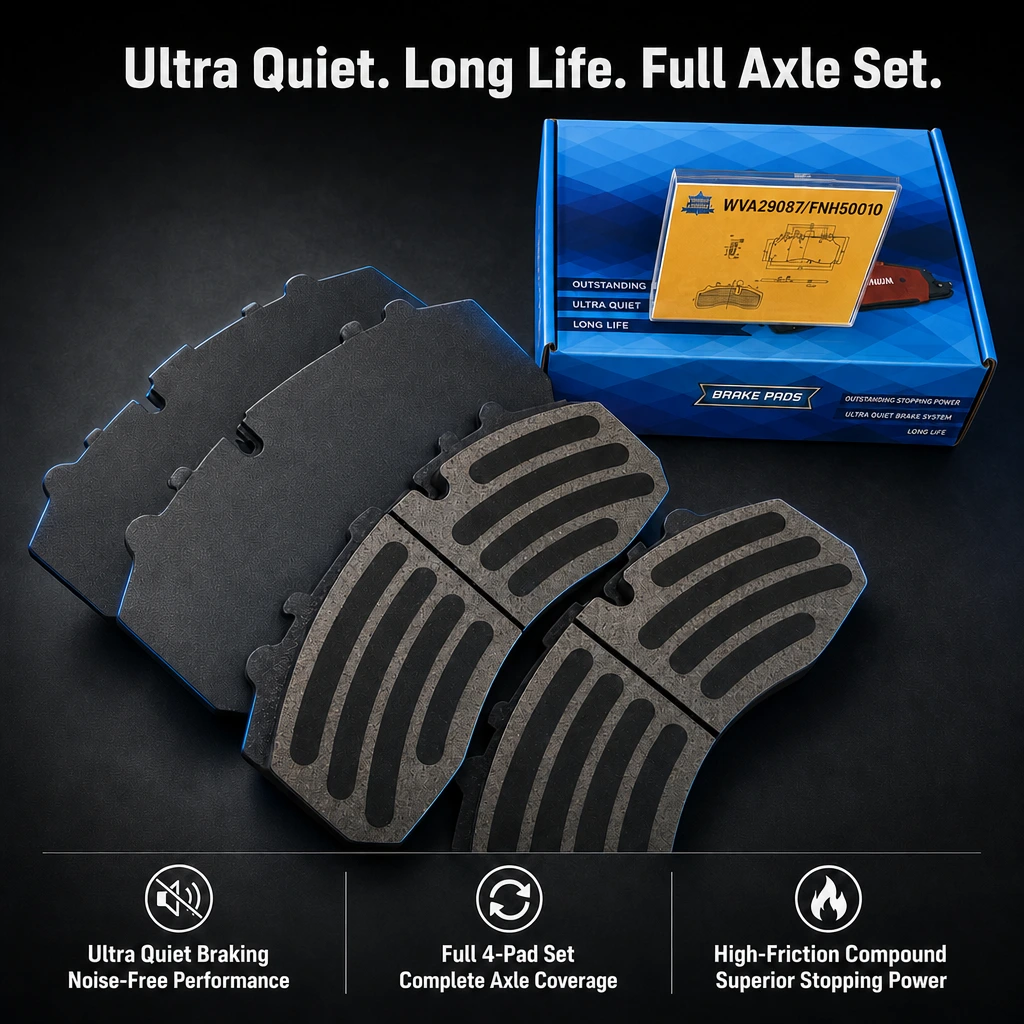
| Reference and source | Record the complete OE or WVA reference, including suffixes, and identify the axle catalog, part stamp or packaging label that supplied it. | Keep the source and its revision with the quote. Ask the supplier to identify the proposed reference and document any cross-reference separately. |
|---|
| Vehicle and brake application | List vehicle or trailer type, model year, engine where applicable, axle identifier and brake design. Identify the drum, shoe or caliper from available records. | Compare the proposed application record and drawing with the axle and brake identifiers before accepting the reference. |
|---|
| Lining or pad dimensions | For a drum lining, include its arc profile, width, thickness and any specified hole pattern. For a disc pad, include the backing plate outline, overall thickness and any required wear-sensor or hardware details. | Check the proposed sample against a dimensioned drawing with tolerances and a dated revision. Record the components included in each set. |
|---|
| Material and sample evidence | State the requested friction material, duty cycle, sample acceptance criteria and destination-market document requirements. | Ask for the proposed compound identifier and available test or approval records that cover the quoted item. Match each record to its reference and scope. |
|---|
| Pack and traceability | Specify neutral packaging or a private-label box, pieces or sets per pack, and the required reference, batch and language on the labels. | Review an actual packing sample and any printed artwork proof. Request the dimensions and gross weight of packed export cartons. |
|---|
| Order quantities | List first-order and expected annual quantities by axle and reference. Identify whether you are buying individual linings, shoe sets or pad sets. | Ask the supplier to identify the MOQ and breaks for the same order unit and quote any sample or inspection costs separately. |
|---|