Sourcing Guide · 3 min read
Oil Filter Bypass Valve vs. Anti-Drainback Valve
· TORQMONT
Last reviewed:
What buyers should check before approving a replacement spin-on filter
A supplier quotes a spin-on oil filter against the original equipment (OE) number you requested. The thread and gasket dimensions match your drawing. The quote also says “with valve.” Before approving the sample, ask which valve that line describes. A bypass valve gives oil a route around the filter media when flow through it is restricted. An anti-drainback valve helps keep oil in the filter after the engine stops. FRAM’s oil filter FAQ
What makes each valve open or close?
The bypass valve starts to open when the pressure difference across the filter media reaches its specified setting. Cold, thick oil or a clogged element can create that difference. Oil can then reach the engine without passing through the media. Some engines have the bypass valve in the engine block. Check where the engine design provides this function before requesting an opening pressure for the filter itself. FRAM’s explanation of the bypass valve
The anti-drainback valve acts as a one-way seal. In many spin-on filters, a flexible flap covers the inlet holes from the inside. Oil flows past the flap into the filter while the engine runs. When flow stops, the flap closes and limits drainage back through the inlet, helping the filter retain oil for the next start. FILTRON’s guide to spin-on filter valves
A catalog example where the field name matters
Look up W 610/3 in MANN-FILTER’s international English catalog. Under Technical Specifications, the bypass valve opening pressure and the number of anti-drainback valves both display 1. The second entry means one valve. The first needs a pressure unit before you can compare it with an engine specification. If a supplier quotes a different part against W 610/3, ask for the opening pressure and unit on that supplier’s own part-specific data sheet. MANN-FILTER W 610/3 catalog entry
What to request with the first sample
| Check | Evidence to request |
|---|---|
| Application and sample identity | The full OE reference, including any suffix, and the applicable engine code or production-date range where relevant. Match the supplier’s quoted part number to the sample label and drawing revision. |
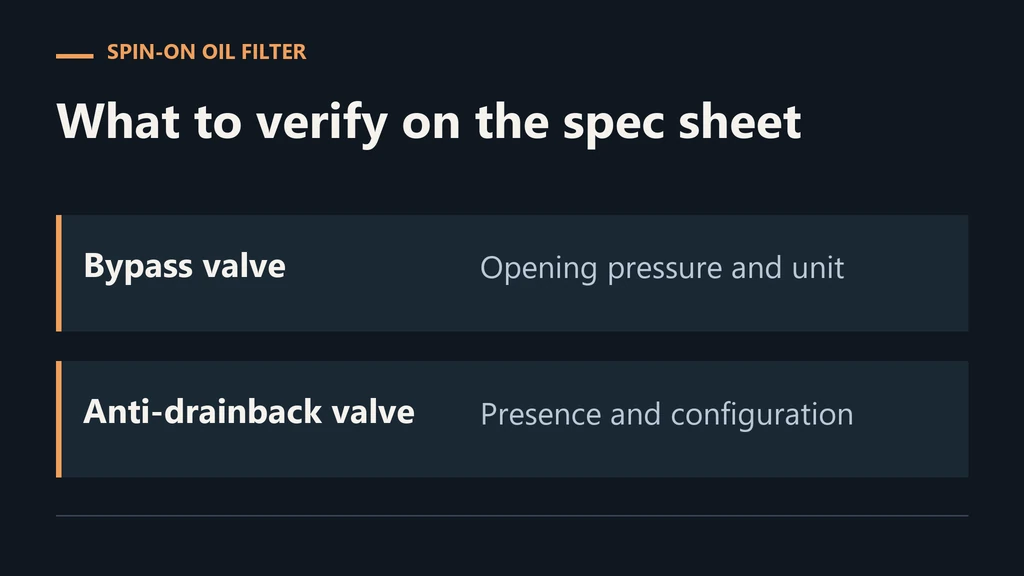
| Bypass arrangement | Application documentation showing where the bypass valve sits. For a valve built into the filter, request its opening pressure difference, the unit and any specified tolerance or range. |
| Anti-drainback valve | A drawing or data sheet identifying the valve configuration for the offered part. If the purchasing specification sets a leakage limit, request the test result and conditions for that sample. |
If two opening pressures appear to differ, keep both original values and units. Check that both documents describe when the valve starts to open, then compare them in the same unit against the requirement for the intended engine. If the difference remains unexplained, record the open question and keep sample approval pending.
If a later shipment differs from the sample you approved, use the batch checklist to trace the affected revision and lot. Torqmont’s oil filter design-change and batch approval checklist