Sourcing Guide · 5 min read
How to Prepare a Multi-SKU Auto Parts RFQ for Fast, Accurate Quotes
· TORQMONT
Last reviewed:
A multi-SKU auto parts RFQ is easiest to quote when each line describes one requested reference, application and pack variant. Give every line a stable ID and ask suppliers to return the exact offered reference, price basis, timing and exceptions against that ID. A buyer can then compare the replies without guessing which drawing, sample or carton belongs to a price.
Start with the batch OE RFQ CSV download for a simple parts list. Use the procurement toolbox for the filter RFQ, OE verification or batch review workbook when a line needs a detailed record. Add a line ID and revision to a buyer copy or record them in Notes so the template fields retain their meaning.
Build One RFQ Row for Each Requested Part
| Field | Send with the RFQ | Ask the supplier to return |
|---|---|---|
| Line ID and OE evidence | Full reference as marked, reference source and date, line ID and RFQ revision. Keep the exact punctuation and any suffix. | Offered part reference and the dated source or drawing that supports the proposed match. List any alternate separately. |
| Vehicle or equipment | Model, build period, engine or equipment variant, fitting position and relevant dimensions or connector details. | Application coverage for the specific offer, drawing revision and a list of mismatches or open checks. |
| Quantity and sale unit | Sample quantity, first-order quantity and annual forecast by SKU. Define pieces, axle sets, kits or packs. | Minimum order quantity, requested price tiers, currency, validity and quoted sale unit. Identify what the kit includes. |
| Packaging and samples | Neutral or private-label packaging option, expected carton marks, sample acceptance criteria and approval owner. | Sample cost and lead time, label or carton proof, customization charges and timing measured from the agreed starting event. |
| Cartons and delivery | Destination market, requested named delivery point, timing and any pallet or handling constraints. | Units per carton, outer dimensions, carton gross weight, order-specific cartons and the scope of quoted delivery charges. |
| Open decisions | List drawings, tests, application questions or terms still awaiting evidence. | A response and proposed owner or date for each open item. Keep tentative offers clearly marked. |
Separate the buyer reference from the supplier’s offered reference. If a proposed replacement differs by suffix or production range, make it a separate offer until the documentation and sample support the match. See the OE cross-reference verification workflow for the evidence to keep with that decision.
Normalize Quotes Before Ranking Suppliers
- Ask each supplier to quote the same order quantities and named delivery point with its currency and validity. Record sample, tooling, printing and packing charges as separate fields whenever quoted.
- Compare like pack contents and units. A kit, axle set and single piece can carry different included hardware. Record the count and components before computing a unit price.
- Reconcile planned carton counts with pack multiples and any partial carton. A supplier reply that does not cover a line should remain clearly marked so the buyer can compare coverage and follow up.
- Keep one released RFQ revision and a quote comparison history. Record who can approve a drawing, sample, packaging proof or commercial exception and give each approval its own status.
Turn Confirmed Packing Data into a Load Estimate
For a worked example, an illustrative line of 240 filters at 20 per carton needs 12 cartons. If each packed carton measures 0.60 × 0.40 × 0.32 m and weighs 8.5 kg gross, that line contributes about 0.922 m³ and 102 kg before any separate pallet or securing material. Keep these figures by exact SKU and carton version. Use the container load calculator to compare a planning mix and the mixed-container consolidation workflow to check which details must be confirmed before booking.
Ask the freight team to check usable loading space, payload, pallet configuration and safe weight distribution for the booked equipment. The IMO guidance on verified gross mass explains the separate packed-container mass verification step. Keep the early cargo estimate separate from the verified shipment figure.
Multi-SKU RFQ FAQ
Can I send the RFQ before confirming every technical field?
Yes. Supply the known reference, quantity, market and intended application. Mark each missing technical field as open and request a conditional quote. Resolve the critical evidence before approving the item for purchase.
Can several part families share the same RFQ file?
Yes. Keep one row per exact reference and variant, group by category, and point the row to any dedicated drawing, sample record or inspection plan. A common file makes the requested quantities and delivery conditions easier to compare.
Why ask for a forecast and a first-order quantity?
The first order defines the quantity actually being quoted. A separate forecast gives context for discussing price breaks and future packing or shipment options. Keep the forecast clearly marked as a planning figure.
What should happen if a supplier proposes a revision after quoting?
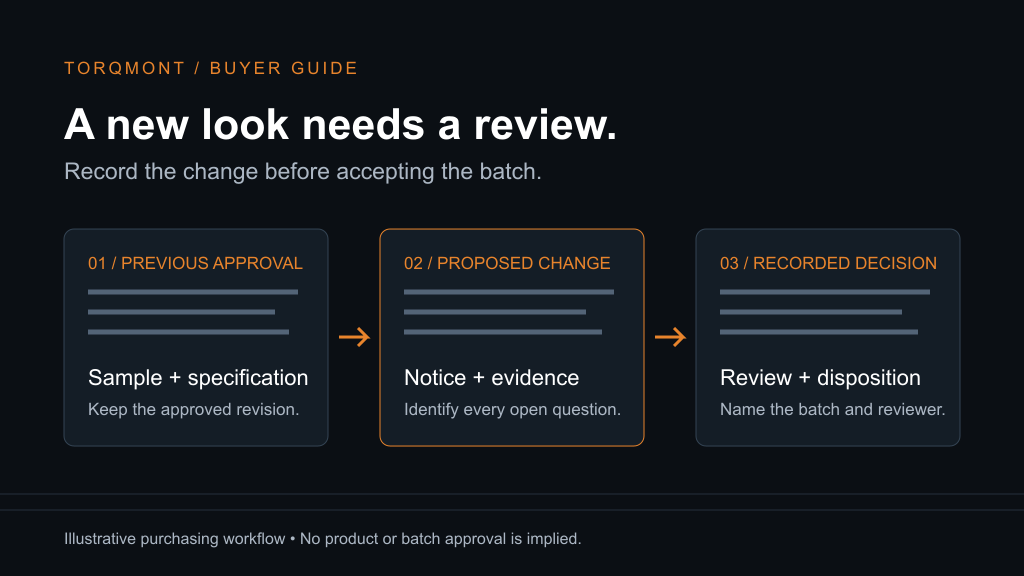
Keep the original offer in the comparison record, identify the proposed change and ask which drawings, samples, terms or carton figures need review again. Release the changed line only after the relevant approver records a decision.